















Description
Vintage Religious Art
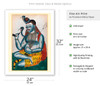
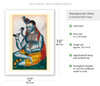
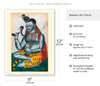
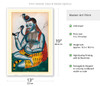
The deity in the painting is Lord Shiva, a principal deity in Hinduism, depicted in the traditional Kalighat art style. This style originated in 19th-century Calcutta (Kolkata) as popular art sold to pilgrims visiting the Kali temple.
Iconography and Symbolism
The image contains several symbolic elements characteristic of Shiva:
Blue Skin/Throat: Shiva is known as Neelakantha (blue-throated) because he consumed a deadly poison (Halahala) that emerged during the churning of the cosmic ocean to save the universe. His throat turned blue when the poison was stopped there by his consort Parvati.
Snake: The cobra coiled around his neck is Vasuki, the king of serpents. It symbolizes his mastery over fear, time (past, present, and future), and death, as well as the latent spiritual energy (kundalini).
Trident (Trishula): The trident he holds represents his power over the cosmic functions of creation, preservation, and destruction. Its three prongs also symbolize the three fundamental aspects of will (iccha), action (kriya), and knowledge (gnana).
Tiger Skin: Shiva is seated on a tiger skin, which represents his victory over the ego and desire, symbolizing his ascetic nature.
Third Eye: On his forehead is a third eye, which symbolizes wisdom and insight beyond ordinary perception. When opened, it is capable of destroying ignorance and evil.
This painting portrays Shiva as the great ascetic (Mahayogi), sitting in a meditative pose with control over all worldly desires and fears.
View AllClose
The deity in the painting is Lord Shiva, a principal deity in Hinduism, depicted in the traditional Kalighat art style. This style originated in 19th-century Calcutta (Kolkata) as popular art sold to pilgrims visiting the Kali temple.
Iconography and Symbolism
The image contains several symbolic elements characteristic of Shiva:
Blue Skin/Throat: Shiva is known as Neelakantha (blue-throated) because he consumed a deadly poison (Halahala) that emerged during the churning of the cosmic ocean to save the universe. His throat turned blue when the poison was stopped there by his consort Parvati.
Snake: The cobra coiled around his neck is Vasuki, the king of serpents. It symbolizes his mastery over fear, time (past, present, and future), and death, as well as the latent spiritual energy (kundalini).
Trident (Trishula): The trident he holds represents his power over the cosmic functions of creation, preservation, and destruction. Its three prongs also symbolize the three fundamental aspects of will (iccha), action (kriya), and knowledge (gnana).
Tiger Skin: Shiva is seated on a tiger skin, which represents his victory over the ego and desire, symbolizing his ascetic nature.
Third Eye: On his forehead is a third eye, which symbolizes wisdom and insight beyond ordinary perception. When opened, it is capable of destroying ignorance and evil.
This painting portrays Shiva as the great ascetic (Mahayogi), sitting in a meditative pose with control over all worldly desires and fears.


