






Description
Vintage Religious Art
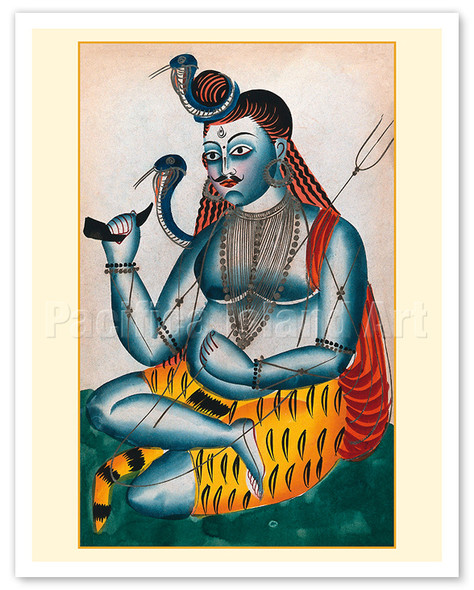
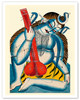
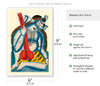
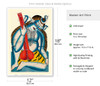
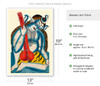
This image is a reproduction of a late 19th-century Kalighat painting titled An Intoxicated Shiva Holding a Sitar or Tambura in the Form of a Lingam. The original artwork is part of the collection at the Wellcome Collection in London and the Victoria and Albert Museum, among others.
Artwork Details
Style: The artwork is done in the Kalighat painting style, a unique genre of Indian painting that originated in the vicinity of the Kalighat Kali Temple in Kolkata (Calcutta), West Bengal, in the 19th century.
Subject: The painting depicts the Hindu deity Shiva as an ascetic and musician, seated and holding a musical instrument, identified as a sitar or tambura.
Technique: Kalighat paintings are known for their bold outlines, vibrant colors (such as indigo, black, yellow, and red), and simplified forms, typically executed in opaque watercolor on paper.
Symbolism: The composition is notable for portraying the musical instrument in a manner suggestive of a lingam, the aniconic representation of Shiva. The painting style was a popular art form, renowned for its social commentary and for capturing the socio-cultural landscape of 19th-century Kolkata.
View AllClose
This image is a reproduction of a late 19th-century Kalighat painting titled An Intoxicated Shiva Holding a Sitar or Tambura in the Form of a Lingam. The original artwork is part of the collection at the Wellcome Collection in London and the Victoria and Albert Museum, among others.
Artwork Details
Style: The artwork is done in the Kalighat painting style, a unique genre of Indian painting that originated in the vicinity of the Kalighat Kali Temple in Kolkata (Calcutta), West Bengal, in the 19th century.
Subject: The painting depicts the Hindu deity Shiva as an ascetic and musician, seated and holding a musical instrument, identified as a sitar or tambura.
Technique: Kalighat paintings are known for their bold outlines, vibrant colors (such as indigo, black, yellow, and red), and simplified forms, typically executed in opaque watercolor on paper.
Symbolism: The composition is notable for portraying the musical instrument in a manner suggestive of a lingam, the aniconic representation of Shiva. The painting style was a popular art form, renowned for its social commentary and for capturing the socio-cultural landscape of 19th-century Kolkata.