











Description
Vintage Pin Up Girl Print
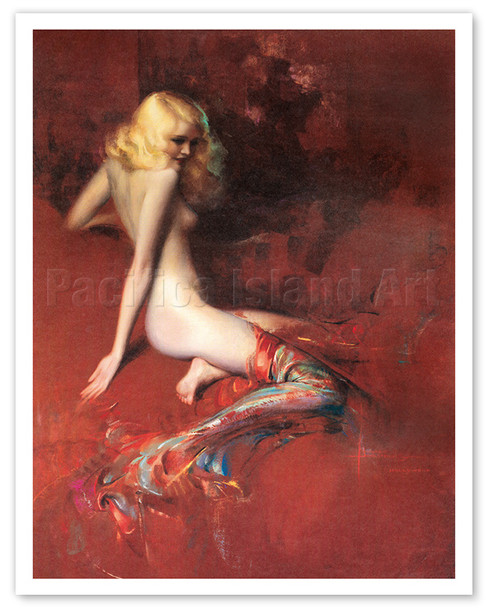
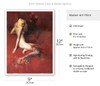
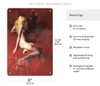
This painting is titled "Rosalie" or "The Hollywood Venus" by the renowned American pin-up artist Rolf Armstrong, created circa 1935.
The artwork, known for its sensual Art Deco style, features a nude blonde woman with a vibrant, flowing fabric that resembles a fish tail, set against a rich red background. Armstrong's pin-up works were highly popular in the 1920s and 1930s, often appearing on the covers of magazines and calendars.
It is also considered one of Rolf Armstrong's premier original pastels and a rare example of the few nude illustrations he produced. Created as one of three nudes in the 1930s, this large, reclining piece showcases Armstrong's mastery of the female form with a flowing, sensual style.
The illustration held personal significance for the artist, reportedly hanging on his studio walls throughout the 1940s and 1950s. It is one of the few surviving pieces created during his brief, prolific time in Hollywood before he returned to New York City and resumed his work with the publishing company Brown & Bigelow.
The idea of "Hollywood Venus" positions the subject as the modern American ideal of beauty, blending the timeless allure of the goddess with the contemporary sophistication of a film star.
View AllClose
This painting is titled "Rosalie" or "The Hollywood Venus" by the renowned American pin-up artist Rolf Armstrong, created circa 1935.
The artwork, known for its sensual Art Deco style, features a nude blonde woman with a vibrant, flowing fabric that resembles a fish tail, set against a rich red background. Armstrong's pin-up works were highly popular in the 1920s and 1930s, often appearing on the covers of magazines and calendars.
It is also considered one of Rolf Armstrong's premier original pastels and a rare example of the few nude illustrations he produced. Created as one of three nudes in the 1930s, this large, reclining piece showcases Armstrong's mastery of the female form with a flowing, sensual style.
The illustration held personal significance for the artist, reportedly hanging on his studio walls throughout the 1940s and 1950s. It is one of the few surviving pieces created during his brief, prolific time in Hollywood before he returned to New York City and resumed his work with the publishing company Brown & Bigelow.
The idea of "Hollywood Venus" positions the subject as the modern American ideal of beauty, blending the timeless allure of the goddess with the contemporary sophistication of a film star.


