



Description
Vintage French Film Movie Poster
JEAN GABIN
PIERRE FRESNAY
et ERIC VON STROHEIM dans
LA GRANDE ILLUSION
Un film de JEAN RENOIR
adaptation et dialogues de JEAN RENOIR et CHARLES SPAAK
Musique de KOSMA
avec DALIO.
La Grande Illusion is a celebrated 1937 French anti-war film masterpiece directed by Jean Renoir. It is renowned for its deep humanism, critique of nationalism and class divisions, and understated portrayal of life as a prisoner of war during World War I, largely without battle scenes.
Key Information
Director: Jean Renoir, who co-wrote the screenplay with Charles Spaak.
Synopsis: The story follows a group of French officers, including the aristocratic Captain de Boeldieu (Pierre Fresnay) and working-class Lieutenant Maréchal (Jean Gabin), who are captured by a refined German officer, Captain von Rauffenstein (Erich von Stroheim), during WWI. The film explores the relationships, common humanity, and class distinctions among the prisoners and their captors across different prison camps.
Major Themes:
Class and Society: The film highlights the idea that class loyalties and the shared experiences of the European aristocracy transcended national enmities, a world order that was rapidly disappearing after WWI.
Futility of War: The title itself is an ironic reference to the "great illusion" that WWI would be the war to end all wars.
Humanity & Prejudice: Renoir emphasizes the commonality of all people regardless of nationality or background, touching on themes of antisemitism through the character of Rosenthal (Marcel Dalio).
Significance:
It was the first non-English-language film to be nominated for an Academy Award for Best Picture.
The Nazis banned and confiscated prints of the film during World War II, with Joseph Goebbels calling Renoir "Cinematic Public Enemy No. 1".
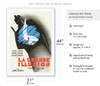
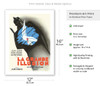
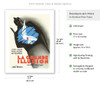
The poster itself features a dove breaking through barbed wire, a powerful symbol of peace and innocence lost to the conflict.
Artwork:
The artist who designed the original French movie poster for La Grande Illusion is Bernard Lancy.
Lancy (1892-1964) was a French artist whose iconic design used powerful symbolism—a dove of peace trapped behind a German soldier's uniform and barbed wire—to convey the film's potent anti-war message.
View AllClose
JEAN GABIN
PIERRE FRESNAY
et ERIC VON STROHEIM dans
LA GRANDE ILLUSION
Un film de JEAN RENOIR
adaptation et dialogues de JEAN RENOIR et CHARLES SPAAK
Musique de KOSMA
avec DALIO.
La Grande Illusion is a celebrated 1937 French anti-war film masterpiece directed by Jean Renoir. It is renowned for its deep humanism, critique of nationalism and class divisions, and understated portrayal of life as a prisoner of war during World War I, largely without battle scenes.
Key Information
Director: Jean Renoir, who co-wrote the screenplay with Charles Spaak.
Synopsis: The story follows a group of French officers, including the aristocratic Captain de Boeldieu (Pierre Fresnay) and working-class Lieutenant Maréchal (Jean Gabin), who are captured by a refined German officer, Captain von Rauffenstein (Erich von Stroheim), during WWI. The film explores the relationships, common humanity, and class distinctions among the prisoners and their captors across different prison camps.
Major Themes:
Class and Society: The film highlights the idea that class loyalties and the shared experiences of the European aristocracy transcended national enmities, a world order that was rapidly disappearing after WWI.
Futility of War: The title itself is an ironic reference to the "great illusion" that WWI would be the war to end all wars.
Humanity & Prejudice: Renoir emphasizes the commonality of all people regardless of nationality or background, touching on themes of antisemitism through the character of Rosenthal (Marcel Dalio).
Significance:
It was the first non-English-language film to be nominated for an Academy Award for Best Picture.
The Nazis banned and confiscated prints of the film during World War II, with Joseph Goebbels calling Renoir "Cinematic Public Enemy No. 1".
The poster itself features a dove breaking through barbed wire, a powerful symbol of peace and innocence lost to the conflict.
Artwork:
The artist who designed the original French movie poster for La Grande Illusion is Bernard Lancy.
Lancy (1892-1964) was a French artist whose iconic design used powerful symbolism—a dove of peace trapped behind a German soldier's uniform and barbed wire—to convey the film's potent anti-war message.